What belongs on a YouTube video production checklist? Forty-five items across five phases: ideation, pre-production, production, post-production, and publishing. The value of a YouTube video production checklist is not thoroughness for its own sake; it is that the cheapest fixes all live in the first two phases, and without a list you discover the problems in the last two.
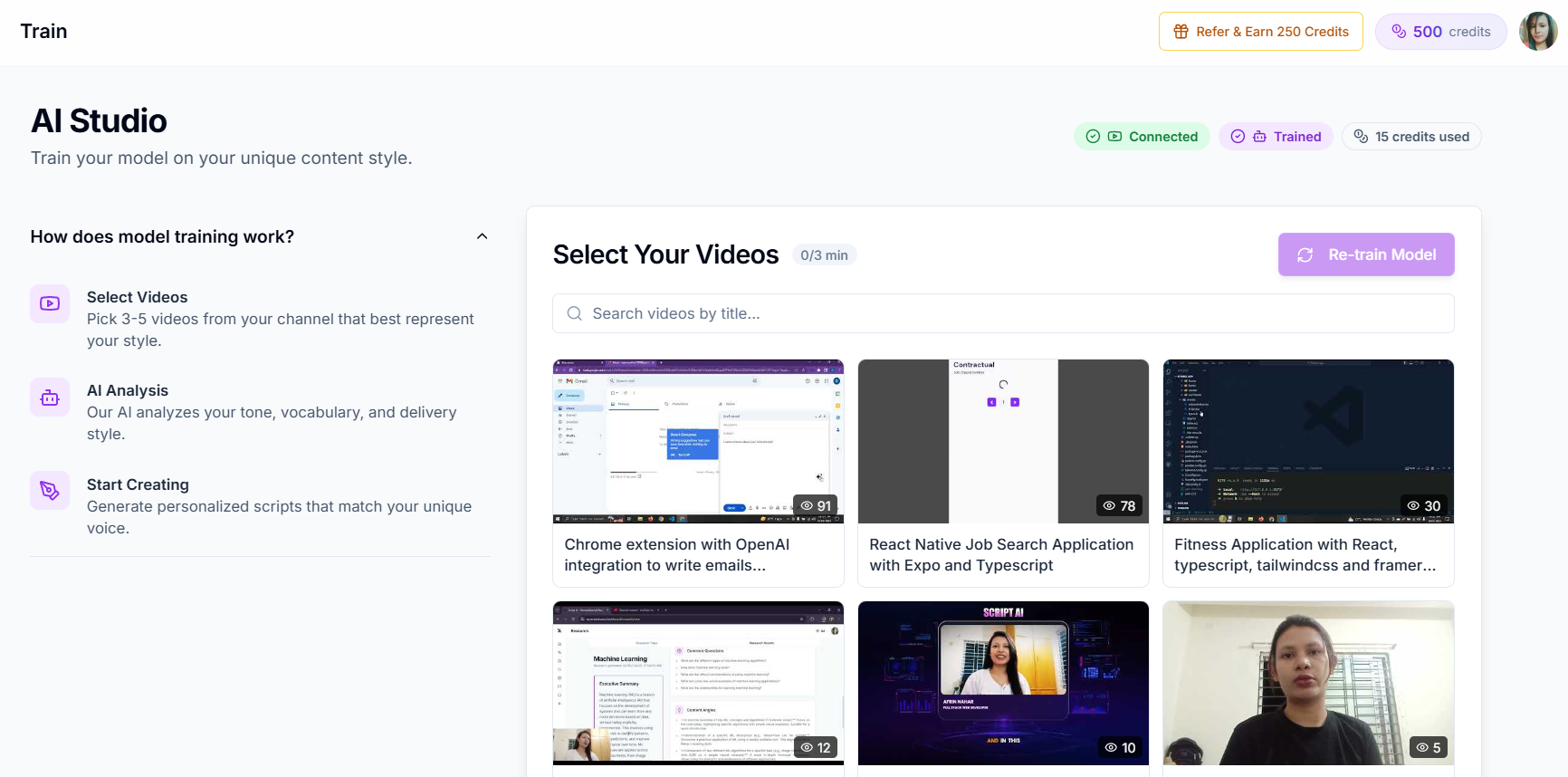
This youtube video production checklist exists because of a specific bad video. The first one I ever published had a hook written in the upload dialogue, captions I never read, and a thumbnail made after the export. It got 91 views. None of those three mistakes were skill problems: they were sequence problems, and a list fixes sequence problems.
The YouTube video production checklist, phase 1: Ideation (7 items)
- Trend check. Is interest in this rising, flat, or already past?
- Competitor gap check. Who has covered it, and what did they miss?
- Search demand validation. Is anyone actually looking for this?
- Channel fit. Would your existing audience expect this from you?
- Opportunity score. Demand weighed against how contested the space is.
- Working title, 3 variants. If you cannot write a clickable title, the topic is not ready.
- Thumbnail concept exists. Before scripting. If the idea does not visualise, it is abstract.
The last two are the cheapest quality filters in the entire process, and the most skipped. Both take five minutes and both can kill a bad video before it costs you a day.
Phase 2: Pre-production (12 items)
- Research and sources gathered, with links you can cite on screen.
- Hook drafted, using a named framework rather than instinct.
- Hook tested aloud. If you stumble, it was written for the eye.
- Full script written, not bullet points you plan to improvise around.
- Retention checkpoints marked at 0:30, 2:00, and every 90 seconds after.
- Open loop placed early and closed before the end.
- CTA positioned somewhere other than the last ten seconds.
- B-roll shot list derived from the script.
- Timestamps assigned: these become your edit decision list.
- Script read aloud once, start to finish, for pacing.
- Runtime estimated at your real speaking rate.
- Title finalised, description and chapters drafted.
This phase is where a youtube video production checklist earns its keep. An hour here routinely saves two in the edit, because most editing pain is structural rather than technical. See story structure for retention.
Phase 3: Production (8 items)
- Audio levels checked on a test recording you actually listen back to.
- Lighting checked on camera, not by eye.
- Framing and headroom confirmed.
- Backup recording running: phone, second recorder, anything.
- Hook recorded three ways. It is fifteen seconds. Give yourself options.
- B-roll captured while the setup is still standing.
- Room tone recorded, thirty seconds of silence. Your editor will thank you.
- Footage backed up before leaving the desk.
Audio is the item to protect above all others. Viewers forgive bad video and leave over bad audio, and unlike framing, it cannot be fixed in post beyond a point.
Phase 4: Post-production (10 items)
- Rough cut against the script, not by discovery in the timeline.
- First 15 seconds tightened ruthlessly. Cut it again after you think it is done.
- Pattern interrupts every 30 to 60 seconds: angle change, B-roll, graphic, tone shift.
- Music levelled under voice, not competing with it.
- Subtitles generated and proofread for names, jargon, and numbers.
- Thumbnail built, 3 variants, checked at phone size.
- End screen configured.
- Chapters added from the script timestamps.
- Export settings verified against YouTube's recommended upload settings.
- Watched once at 2× speed: pacing errors are obvious at double speed and invisible at normal speed.
That last trick is worth the price of the whole checklist. Dead air, repetition, and a saggy middle all announce themselves at 2×.
Phase 5: Publish and beyond (8 items)
- Title and description SEO pass, with the main phrase in the first sentence.
- Tags added, briefly. They matter less than the time people spend on them.
- Pinned comment that opens a conversation rather than asking for likes.
- Community post on publish day.
- Shorts clips extracted from the self-contained segments you wrote in.
- Subtitles translated for your top secondary market.
- Dubbed versions queued for languages that already show watch time.
- CTR and retention checked at 48 hours, against your own median.
The last item is the one that turns a checklist into a feedback loop. Without it, you repeat the same mistake at a steady cadence forever.
How to adapt it
Solo creator: run all five phases, but batch them: ideation for four videos in one session, then four scripts, then a recording day. Context switching is what makes solo production feel endless.
Small team: split at the phase boundaries. Phases 1 and 2 belong to whoever owns strategy; 3 and 4 to whoever owns craft. Handoffs happen at documents, not conversations.
Agency: every item becomes a status field. The phases map directly to a client approval workflow. See how agencies scale production.
Which steps can be automated
An honest table, including tools that are not ours, because a youtube video production checklist that maps only to one product is a brochure.
| Checklist item | Automatable? | Tools |
|---|---|---|
| Trend and demand check | Google Trends, vidIQ, TubeBuddy, Creator AI | |
| Opportunity scoring | Creator AI, Spotter Studio | |
| Hook drafting | Creator AI, ChatGPT, Claude | |
| Full script | Creator AI (voice-trained), ChatGPT | |
| Retention structure | Creator AI Story Builder | |
| Timestamps | Creator AI | |
| B-roll shot list | ⚠️ Partial | Derived from script |
| Audio and lighting checks | Physical | |
| Rough cut | ⚠️ Partial | Descript, CapCut |
| Subtitles | Creator AI, Descript, CapCut | |
| Subtitle proofreading | ⚠️ Human required | - |
| Translation and dubbing | Creator AI, ElevenLabs, HeyGen | |
| Thumbnail concepts | Creator AI, Canva | |
| Thumbnail A/B testing | TubeBuddy, Thumbnail Test | |
| CTR and retention review | Judgement |
Seven items automate outright and about a dozen more get faster. The rest are craft, and no tool list changes that.
The 10 items creators skip most
Ranked by how much the skip costs.
- Reading the script aloud. Catches every unspeakable sentence in ten minutes.
- Thumbnail concept before scripting. Catches abstract ideas before you spend a day on them.
- Recording the hook three ways. Fifteen seconds of insurance on the most important part.
- Room tone. Free during the shoot, impossible afterwards.
- Proofreading subtitles. Names and jargon are exactly what automatic captions get wrong.
- Watching at 2× before export. The cheapest pacing check available.
- Backup recording. You will only need it once.
- Placing the CTA away from the end. Almost nobody is watching at the end.
- Checking CTR at 48 hours. Without it there is no feedback loop.
- Translating subtitles. The cheapest audience expansion on the platform.
Every one of those takes under ten minutes. Together they are the difference between a process and a scramble.
Print this youtube video production checklist, or rebuild it in whatever tool you already use. The format matters far less than running it the same way twice in a row. Start free if you want the seven automatable items handled in one place.
Keep Reading
- How to Build a YouTube Content Calendar That Survives
- YouTube Video Story Structure for Retention
- How to Write YouTube Hooks That Stop the Scroll
- How to Improve YouTube Audience Retention and Watch Time
- Automate the seven items worth automating, start free or see plans.